What Loan-to-Value (LTV) Ratio Means for Properties Above ₹75 Lakh
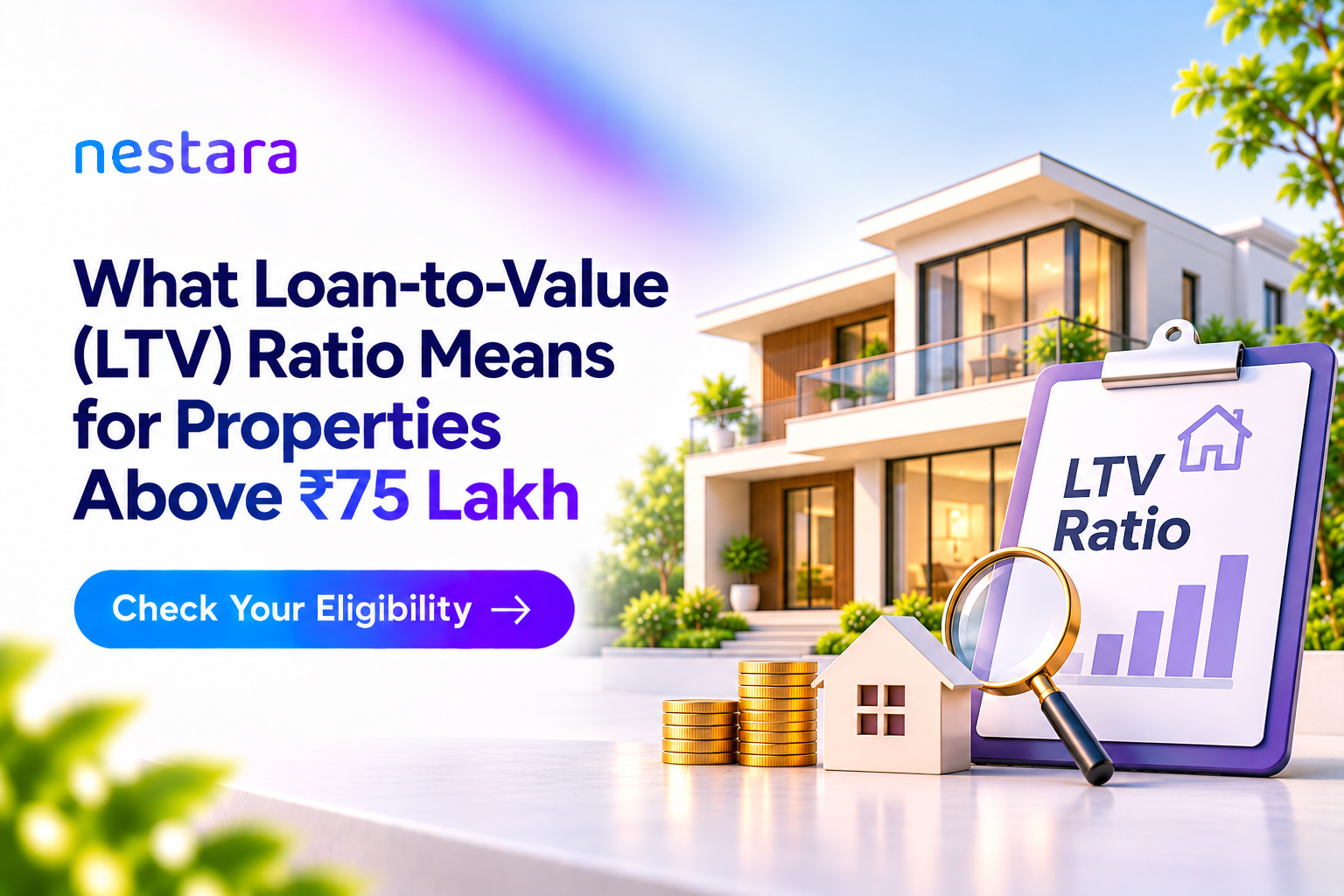
When you apply for a home loan for a property priced above ₹75 lakh, the loan-to-value (LTV) ratio determines the maximum proportion of the property’s accepted value that a lender may finance. Under the Reserve Bank of India’s housing finance rules for banks, the LTV ceiling for individual housing loans above ₹75 lakh is generally 75%.
This means you may need to arrange at least 25% of the accepted property value yourself, along with stamp duty, registration and other costs that may not be included in the bank’s LTV calculation. Understanding this requirement before booking a property can help you plan your down payment and explore your New Home Loan options with Nestara.

What is the LTV ratio in a home loan?
The loan-to-value ratio measures how much a lender finances compared with the value of the property offered as security.

The formula is:
LTV Ratio = (Home Loan Amount / Property Value) * 100
For example, if a lender finances ₹75 lakh against a property valued at ₹1 crore, the LTV ratio is 75%. You contribute the remaining ₹25 lakh from your own funds, excluding additional purchase costs.
The important distinction is that LTV is based on the lender’s accepted property value, not necessarily the price you negotiate with the seller. If the lender’s valuation is lower than the agreed purchase price, your required contribution may increase.
What is the RBI’s LTV limit for home loans above ₹75 lakh?
For individual housing loans above ₹75 lakh, the RBI’s current directions prescribe a maximum LTV ratio of 75% for scheduled commercial banks. Housing finance companies also have a 75% ceiling for this loan category.
The applicable bank loan categories are:
| Individual home loan amount | Maximum LTV ratio |
|---|---|
| Up to ₹30 lakh | 90% |
| Above ₹30 lakh and up to ₹75 lakh | 80% |
| Above ₹75 lakh | 75% |
These are regulatory ceilings, not guaranteed financing percentages. A lender may offer a lower LTV depending on its credit policy, property valuation and your eligibility.
One important clarification: The ₹75 lakh threshold refers to the home loan amount, not simply the property’s purchase price. For example, a property worth ₹90 lakh does not automatically fall into the above-₹75-lakh loan category if you are borrowing ₹70 lakh.
How much down payment do you need for a property above ₹75 lakh?
Your down payment depends on the loan amount, the lender’s valuation and the applicable LTV ceiling. For a loan above ₹75 lakh, you generally need to contribute at least 25% of the accepted property value yourself.
Consider these examples:
Example 1: Property worth ₹1.2 crore
| Particulars | Amount |
|---|---|
| Property value | ₹1.20 crore |
| Maximum LTV | 75% |
| Illustrative loan amount | ₹90 lakh |
| Your contribution | ₹30 lakh |
The ₹90 lakh loan represents exactly 75% of the ₹1.2 crore property value.
Example 2: Property worth ₹90 lakh
Suppose you need a home loan of ₹70 lakh. Since the loan amount falls within the above-₹30-lakh-to-₹75-lakh category, the applicable regulatory LTV ceiling is 80%.
| Particulars | Amount |
|---|---|
| Property value | ₹90 lakh |
| Maximum LTV | 80% |
| Illustrative loan amount | ₹70 lakh |
| Your contribution | ₹20 lakh |
This illustrates why you should assess the loan amount as well as the property price when planning your down payment.
Are stamp duty and registration charges included in the LTV calculation?
No. For most home loans, stamp duty, registration and other documentation charges are excluded from the property cost used to calculate LTV.
This means your actual upfront cash requirement can be higher than the down payment shown in an LTV calculation. You should separately budget for:
- Stamp duty and registration charges.
- Legal and technical verification fees, where applicable.
- Brokerage, if payable.
- Interior work, furnishing and moving expenses.
- Other charges not financed by the lender.
The RBI provides a limited exception for properties costing up to ₹10 lakh, where certain charges may be included for LTV calculation. This exception generally does not apply to the higher-value properties discussed here.
What happens if the bank values your property below its purchase price?
If the lender’s valuation is lower than your agreed purchase price, the loan amount may be calculated using the lower accepted value. This can increase the amount you need to arrange yourself.
For example:
- Agreed property price: ₹1 crore.
- Lender’s accepted valuation: ₹95 lakh.
- Maximum LTV for a loan above ₹75 lakh: 75%.
- Illustrative maximum loan at that LTV: ₹71.25 lakh.
If you were expecting a loan of ₹75 lakh, you would need to arrange the difference from your own funds, in addition to applicable purchase costs.
This is why it is risky to finalise a property purchase based only on an assumed loan amount. You can also read our guide on why a home loan eligibility calculator estimate may differ from the actual bank sanction.
Does meeting the LTV requirement guarantee home loan approval?
No. Meeting the LTV requirement does not guarantee approval because lenders assess your financial eligibility and the property’s legal and technical suitability separately.
They may consider:
- Monthly income and employment or business stability.
- Existing EMIs and repayment obligations.
- Credit history and repayment record.
- Property title, approvals and valuation.
- Loan tenure and your age at maturity.
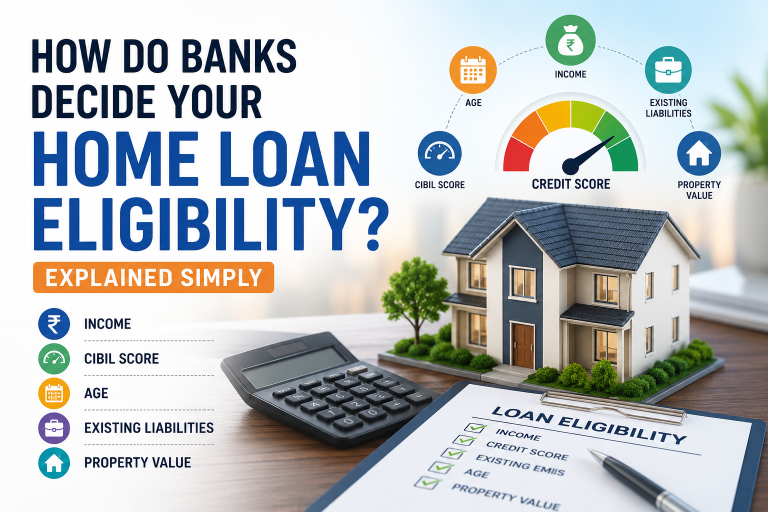
For a better understanding of how lenders assess repayment capacity, read our guide on how banks decide your home loan eligibility.
Conclusion
The LTV ratio is important when buying a higher-value property because it determines how much of the accepted property value a lender can finance. For individual home loans above ₹75 lakh, the applicable RBI ceiling for banks and housing finance companies is 75%.
However, your actual loan amount may be lower depending on the lender’s valuation, credit policy and your financial eligibility. Plan for the down payment, stamp duty, registration and other expenses before committing to a property.
With Nestara, you can explore our New Home Loan options, understand your eligibility and compare suitable borrowing options before making your decision.
FAQs
1. What is the maximum LTV ratio for a home loan above ₹75 lakh?
The maximum LTV ratio is 75% for individual housing loans above ₹75 lakh under the applicable RBI directions for banks and housing finance companies. Individual lenders may offer a lower percentage.
2. Does a property worth more than ₹75 lakh automatically have a 75% LTV limit?
No. The relevant loan category is determined by the home loan amount, not simply the property’s purchase price. A property above ₹75 lakh financed with a loan of ₹75 lakh or less may fall under a different LTV category.
3. Can a bank finance 100% of a property worth ₹1 crore?
No. The applicable LTV ceilings restrict how much a regulated lender can finance through an individual housing loan. You must arrange the required contribution and other purchase costs yourself.
4. Is the LTV ratio calculated on the agreement value or bank valuation?
The lender uses the property’s accepted or realisable value for its LTV assessment. If its valuation is lower than the agreement price, the amount it finances may also be lower.
5. Can I include stamp duty and registration charges in my home loan?
Generally, these charges are excluded when calculating the property’s value for LTV purposes. Whether a lender offers any separate financing arrangement for additional costs depends on its product and applicable rules.
6. Can I get a loan above 75% LTV if I have a high credit score?
A strong credit score may support your overall eligibility, but it does not override the applicable regulatory LTV ceiling. Your lender must follow the relevant limit.