What Is a Balance Transfer in Home Loans?
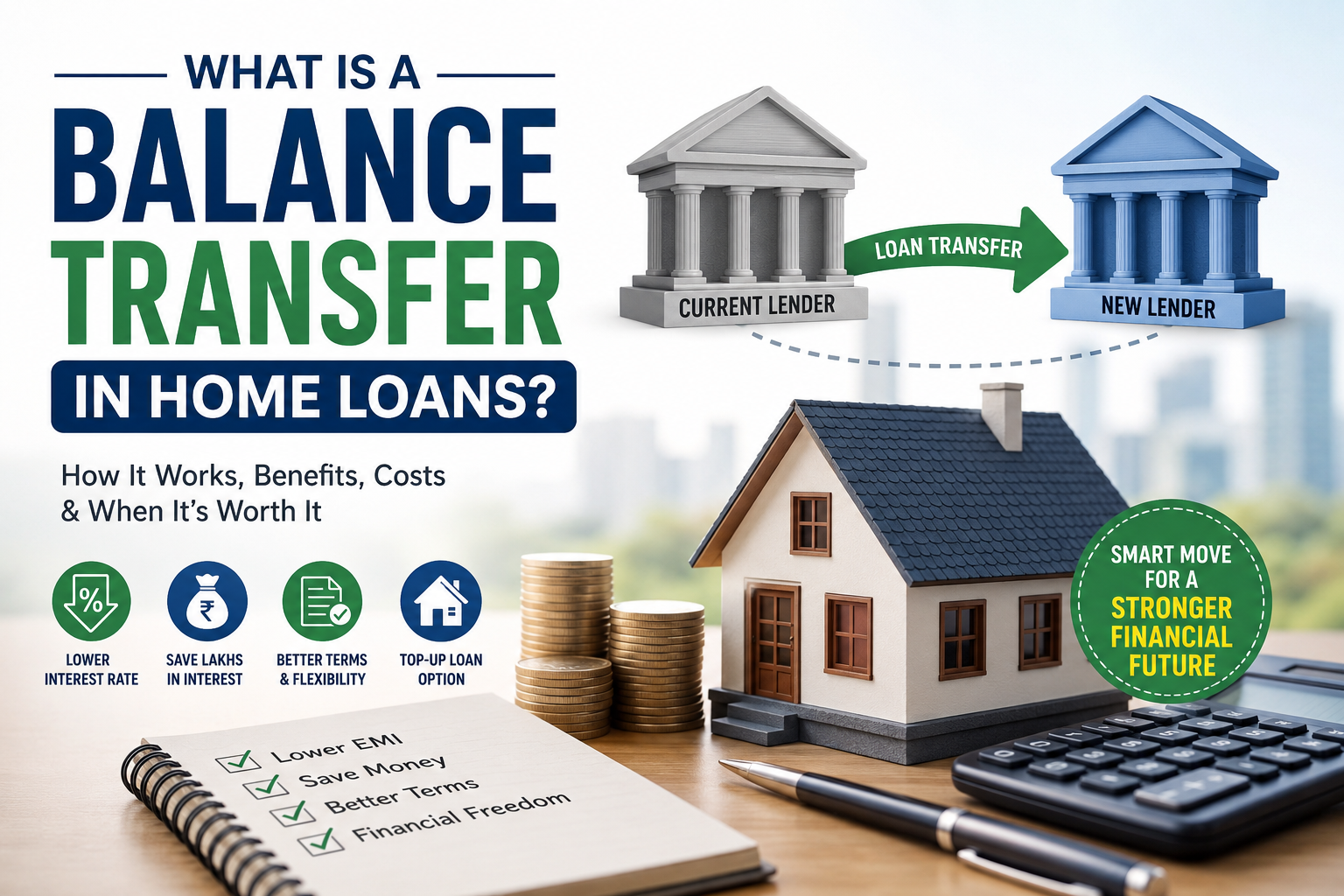
A balance transfer in home loans is the process of moving your outstanding loan from your current lender to a new lender offering a lower interest rate or better terms. In this guide, you’ll learn how balance transfers work, when they actually save you money, the hidden costs to watch out for, and how to evaluate whether switching is worth it — so you can potentially save lakhs over the remaining tenure.
Quick Summary
- Balance transfer can reduce your interest rate by 0.5%–2%, saving lakhs over the remaining loan tenure.
- New lenders also offer top-up loans alongside the transfer, often at the same rate.
- Switching costs include processing fees (0.25%–1%), legal/valuation charges, and stamp duty on the new agreement.
- A balance transfer makes the most sense in the first 5–7 years of the loan, when interest dominates the EMI.
- Compare the actual savings (interest saved minus all switching costs) before deciding.
What Is a Balance Transfer?
What does it mean?
A balance transfer is a refinancing transaction where the new lender pays off your existing home loan in full and starts a fresh loan with you at improved terms — typically a lower interest rate, longer tenure, or both. Your property collateral simply moves from the old lender to the new one. From your side, the EMI starts going to a new bank, and you ideally pay less every month for the remaining tenure of the loan.
How does it work?
You apply to the new lender with your existing loan account details, latest sanction letter, and property documents. The new lender evaluates your CIBIL score, current income, and the outstanding loan amount. Once approved, they issue a cheque or RTGS directly to your existing lender to close the loan. Property documents transfer to the new lender, a new mortgage is registered, and your new EMI begins. The old loan account closes with a “loan transferred” status.
Key Factors You Should Know
What are the important factors to consider?
Five factors decide whether a balance transfer is worthwhile: the rate differential between old and new lenders, your remaining tenure, total switching cost, your current CIBIL score (which determines the new rate offered), and whether you also need a top-up loan. The general rule — the rate gap should be at least 0.5% and the remaining tenure should be at least 5 years for the math to work in your favour.
How do these factors impact your decision?
The earlier in the loan you switch, the more interest you save — because more of your remaining EMI is still going toward interest. On a ₹40 lakh outstanding loan with 15 years remaining, switching from 9.5% to 8.5% saves about ₹4.5 lakh in total interest, even after ₹40,000 in switching costs. The same switch in the last 5 years of a loan barely saves anything because most of the EMI is principal by then.
- Rate Differential — Minimum 0.5% gap to justify the switch
- Remaining Tenure — Best to switch in first 5–7 years
- Switching Costs — Processing fee, legal, valuation, stamp duty
- CIBIL Score — Your current score decides the new rate offered
- Top-up Need — Many lenders bundle top-up at home loan rates
Options / Scenarios Explained
What are the available options?
You have three options when your current rate seems high. First, request your existing lender to reduce your rate (often successful for floating loans, especially with EBLR linkage). Second, do a balance transfer to a new lender offering a lower rate. Third, use a balance transfer with top-up to consolidate other high-interest debts (personal loan, credit card) into the home loan rate, saving on all of them simultaneously.
How do different scenarios affect outcomes?
Each option has different effort and savings. Negotiating with your existing lender takes one phone call and a small conversion fee (0.25–0.5% of outstanding) — often the smartest first move. A full balance transfer requires more paperwork but delivers larger savings if the rate gap is meaningful. A balance transfer with top-up can effectively halve your overall interest cost if you’re carrying personal loans at 14–18%.
| Scenario | Effort | Typical Savings |
| Renegotiate with current lender | Low | 0.25–0.5% rate reduction |
| Balance transfer (rate only) | Medium | 0.5–1.5% rate reduction |
| Balance transfer + top-up | Medium-High | Replace high-cost debt at home loan rate |
| Stay with current lender | None | Zero — but pay more long-term |
Which Option Is Right for You?
When should you do a balance transfer?
Do a balance transfer when you’re in the first half of your loan tenure (more interest saving potential), the new rate is at least 0.5% lower than your current one, and the total switching cost is recovered through interest savings within 12–24 months. Also consider it if you need a top-up loan for renovation or other big-ticket needs and your existing lender isn’t willing to offer competitive rates.
When should you stay with your current lender?
Stay with your current lender if you’re in the last 5 years of your loan (savings are minimal because EMI is mostly principal), the new rate gap is under 0.5%, or your existing lender agrees to match the new rate after a renegotiation request. Also stay if your CIBIL score has dropped since the original loan — the new rate offered may not actually be better than what you have today.
Practical Tips to Make the Best Decision
- First, ask your current lender to match the lower rate — they often agree to retain the customer for a small conversion fee.
- Calculate the break-even point — divide total switching cost by monthly EMI savings to see how many months until you start netting savings.
- Get pre-approval from 2–3 new lenders before initiating the transfer to ensure you actually qualify at the advertised rate.
- Confirm there are no foreclosure penalties on your existing loan (RBI has banned them on floating individual loans, but always verify).
Common Mistakes to Avoid
- Switching without comparing total switching cost vs interest saved — you might end up barely breaking even.
- Falling for low “advertised” rates — your actual offered rate depends on your CIBIL, income, and loan amount, and may be higher.
- Not considering loan-tenure differences — a new lender extending tenure to lower the EMI may show “savings” but increase total interest paid.
Conclusion
A balance transfer can be one of the smartest financial moves of a home loan, but only if the math actually works in your favour. The rate gap, remaining tenure, and total switching cost must combine to deliver meaningful net savings. Before initiating a transfer, give your current lender a chance to match the offer — it’s the easiest way to save without paperwork. If you do switch, do it early in the tenure and compare 3–4 lenders to lock in the best deal.
FAQ Section
Is balance transfer of a home loan worth it?
A balance transfer is worth it if the new rate is at least 0.5% lower, you have at least 5 years remaining on your loan, and the total switching cost is recovered within 12–24 months through monthly EMI savings. On a ₹40 lakh outstanding loan with 15 years remaining, a 1% rate cut can save around ₹4–5 lakh in total interest, even after switching expenses.
What are the charges for a home loan balance transfer?
Typical charges include a processing fee of 0.25%–1% of the loan amount (some lenders waive this), legal and technical valuation fees of ₹5,000–₹15,000, stamp duty on the new mortgage agreement (varies by state), and GST on these charges. Some lenders run promotional offers with zero processing fees. The total cost typically ranges from ₹15,000 to ₹50,000 depending on loan size and state.
Can I get a top-up loan with a balance transfer?
Yes, most lenders offer a top-up loan along with a balance transfer, often up to 20–30% of the original loan amount or based on the property’s current value. The top-up is usually offered at the same rate as the home loan — much cheaper than a personal loan. It’s commonly used for renovation, children’s education, business needs, or consolidating high-cost personal debt.
Does a balance transfer affect my CIBIL score?
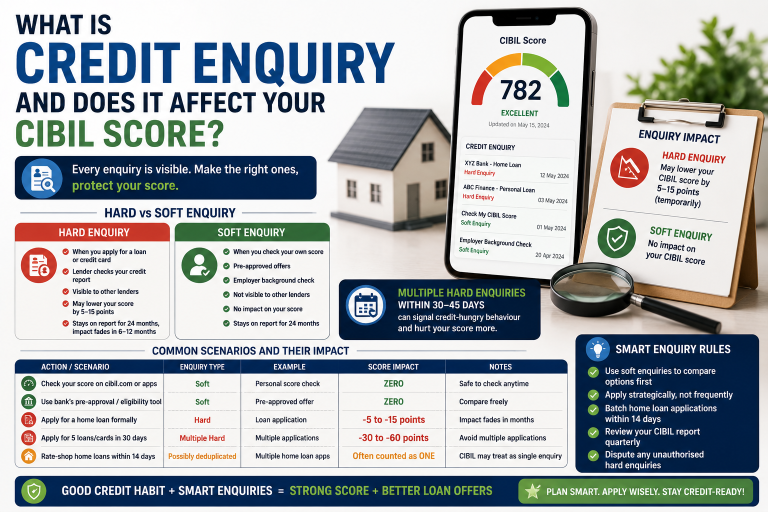
A balance transfer triggers a hard enquiry (when the new lender pulls your CIBIL report), which may cause a small temporary dip of 5–15 points. Once the new loan is reported and the old one is closed, your score recovers within 2–3 months. Successfully managing the new EMI on time can actually improve your score over time. Multiple simultaneous applications, however, will hurt it more.
How long does a home loan balance transfer take?
A balance transfer typically takes 15–30 days from application to disbursement. It involves credit assessment by the new lender (5–7 days), property re-valuation (3–7 days), legal verification of property documents (5–10 days), foreclosure of the old loan (3–5 days), and registration of the new mortgage (varies by state). Having all documents ready in advance can shorten this timeline.