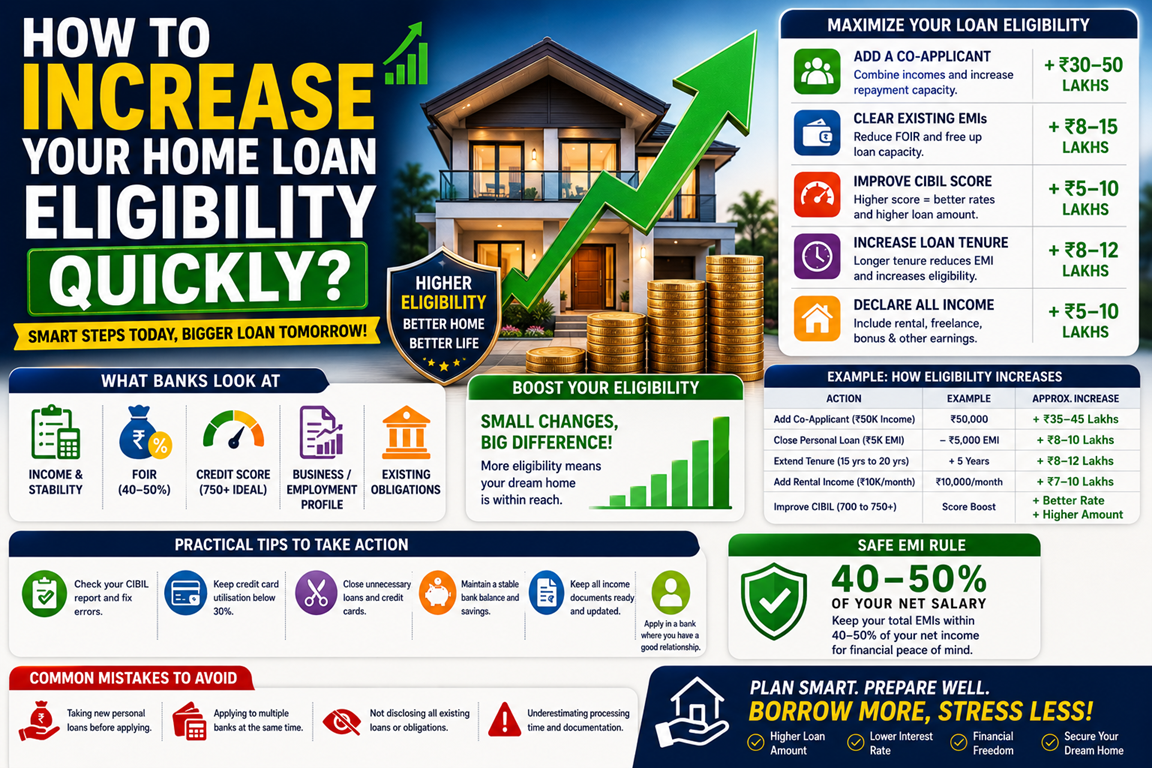
How to Increase Your Home Loan Eligibility Quickly?
Increasing your home loan eligibility does not take years — the right steps taken 3–6 months before applying can make a significant difference. From boosting your CIBIL score to adding a co-applicant, this guide covers every actionable strategy to maximise how much home loan you can get.
Quick Summary
- Add a working co-applicant to combine incomes and boost eligibility
- Clear existing EMIs to reduce FOIR and free up loan capacity
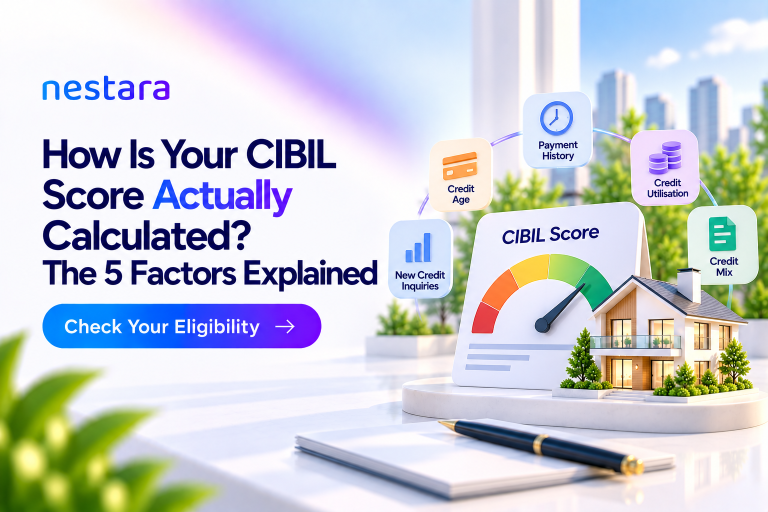
- Improve your CIBIL score to unlock higher loan amounts and better rates
- Choose a longer loan tenure to reduce EMI and increase eligible loan amount
- Declare all income sources including rental, freelance, and bonus income
What Is Home Loan Eligibility and Why Does It Vary?
What does it mean?
Home loan eligibility is the maximum amount a bank will lend you, determined by your repayment capacity. It varies from person to person based on income, existing debt, credit score, and the lender’s policies. Two people with the same salary can have vastly different eligibility depending on their financial profiles.
For a closer look at who can be a co-applicant, how lenders assess both borrowers, and what to check before applying jointly, read Joint Home Loan: How Adding a Co-Applicant Increases Your Eligibility.
How does it work?
Banks primarily use FOIR (Fixed Obligation to Income Ratio) and your CIBIL score to determine eligibility. FOIR ensures your total EMIs do not exceed 40–50% of your gross income. Your CIBIL score affects whether you are approved at all and at what interest rate. A lower rate increases your loan eligibility for the same EMI capacity.
Key Factors You Can Change to Boost Eligibility
What are the important factors to consider?
Unlike your salary, which takes time to grow, several factors affecting eligibility can be changed relatively quickly. Reducing existing debt, improving credit score, adding a co-applicant, and choosing the right tenure are all actions within your control that can substantially increase your eligible loan amount.
How do these factors impact your eligibility?
Here is the approximate eligibility impact of each key action:
- Adding a co-applicant with ₹50K income: Can increase eligibility by ₹35–45 lakhs
- Clearing a ₹5,000/month EMI: Increases eligibility by approximately ₹8–10 lakhs
- Improving CIBIL from 700 to 750+: Unlocks better rates and may increase approved amount
- Extending tenure from 15 to 20 years: Can increase eligibility by ₹8–12 lakhs on the same EMI
- Declaring rental income of ₹10K/month: Adds ₹7–10 lakhs to eligibility
Strategies to Increase Eligibility
What are the available strategies?
There are both short-term and medium-term strategies to boost your home loan eligibility. Short-term actions like clearing a personal loan or adding a co-applicant can be done in 1–3 months. Medium-term actions like improving your CIBIL score may take 6–12 months but have a larger and more lasting impact.
| Strategy | Eligibility Impact | Time Required |
| Add co-applicant | Very High (+₹30–50L) | 1–2 weeks |
| Close personal loan EMI | High (+₹8–15L per ₹5K EMI) | 1–3 months |
| Increase loan tenure | Moderate (+₹8–12L) | Immediate |
| Improve CIBIL to 750+ | High (better rate + higher amount) | 6–12 months |
| Declare all income | Moderate (+₹5–10L) | 1–4 weeks (documents) |
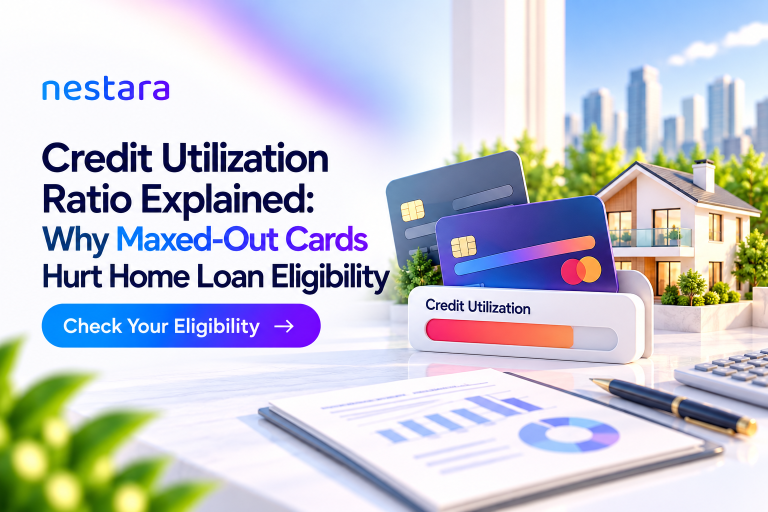
| Reduce credit card utilisation | Moderate (score improvement) | 1–3 months |
How do different strategies affect outcomes?
Adding a co-applicant is the fastest and most impactful single action you can take. Clearing existing debts has the second-highest impact and directly reduces your FOIR. Extending tenure is the easiest change with no upfront cost. Improving your CIBIL score takes longer but permanently improves your financial position for all future credit needs.
Your credit profile can also affect the interest rate you receive, so read How Your Credit Score Directly Changes the Interest Rate You’re Offered to understand how your score may influence your borrowing costs.
Which Strategy Is Right for You?
When should you focus on short-term fixes?
If you need to apply for a home loan within 1–3 months, focus on actions that can be done immediately: add a co-applicant, close small personal loans, extend your preferred tenure, and compile all income documents including rental agreements and bonus letters. These changes can meaningfully increase your eligibility without waiting months.
When should you take a longer-term approach?
If your CIBIL score is below 700 or you have significant existing debt that cannot be cleared quickly, a 6–12 month preparation period is worth it. Use this time to systematically improve your credit score, close existing loans, and build a stronger financial profile. The higher loan amount and lower interest rate you qualify for will save you lakhs over the loan tenure.
Practical Tips to Boost Eligibility
- Get a free CIBIL report and fix any errors before applying
- Close credit cards with high balances to immediately improve your utilisation ratio
- Combine incomes with your spouse through a joint application — it is the single biggest eligibility booster
- Opt for step-up EMI plans if available — lower initial EMI with higher amounts later can increase approval
- Apply to a bank where you have a long-standing salary account — existing relationship often helps
Common Mistakes to Avoid
- Taking a personal loan to fund the down payment — this shows up in FOIR and reduces home loan eligibility
- Opening multiple new credit cards before applying, which triggers hard enquiries
- Not disclosing existing loans, which will be discovered in the CIBIL check and raise trust issues
- Underestimating processing time and rushing the application without proper preparation
Conclusion
Boosting your home loan eligibility is a combination of quick wins and strategic preparation. Add a co-applicant, clear existing EMIs, extend your tenure, and present all income sources to the lender. If time allows, spending 6–12 months improving your credit score will deliver the most long-lasting benefits across your entire loan tenure.
Frequently Asked Questions
Can adding a co-applicant really increase my loan eligibility significantly?
Yes, significantly. When both applicants’ incomes are combined, the eligible EMI capacity increases proportionally. For example, if you earn ₹50K and your spouse earns ₹40K, combined eligibility is calculated on ₹90K income, potentially making a ₹75–80 lakh loan viable compared to ₹35–45 lakhs on your salary alone.
Does choosing a longer tenure really increase my loan amount?
Yes. A longer tenure reduces the monthly EMI for the same loan amount. This means your income supports a higher loan within the FOIR limit. For example, at 8.5%, a ₹20,000 EMI supports a ₹20.9 lakh loan over 15 years but a ₹24.4 lakh loan over 20 years — a difference of nearly ₹3.5 lakhs with no income change.
How does clearing a personal loan help home loan eligibility?
Every loan EMI you carry reduces your available FOIR capacity. When you close a personal loan with a ₹5,000 monthly EMI, that ₹5,000 becomes available for your home loan EMI. At 8.5% over 20 years, an extra ₹5,000 in eligible EMI translates to approximately ₹8–10 lakhs more in home loan eligibility.
Will declaring rental income help my home loan eligibility?
Yes. Most banks accept 70–80% of rental income shown in your ITR and bank statements as additional income. This increases your gross income base, which improves your FOIR headroom and directly increases the eligible loan amount. Make sure the rental income is consistently documented in ITR and backed by a valid rent agreement.
Can I increase eligibility by making a larger down payment?
A larger down payment reduces the loan amount required, which makes approval easier. However, it does not directly increase the bank’s assessment of how much they are willing to lend you. That said, demonstrating the ability to arrange a large down payment signals financial discipline and can positively influence the lender’s confidence in your repayment capacity.