What Is Loan Moratorium and When Should You Use It?
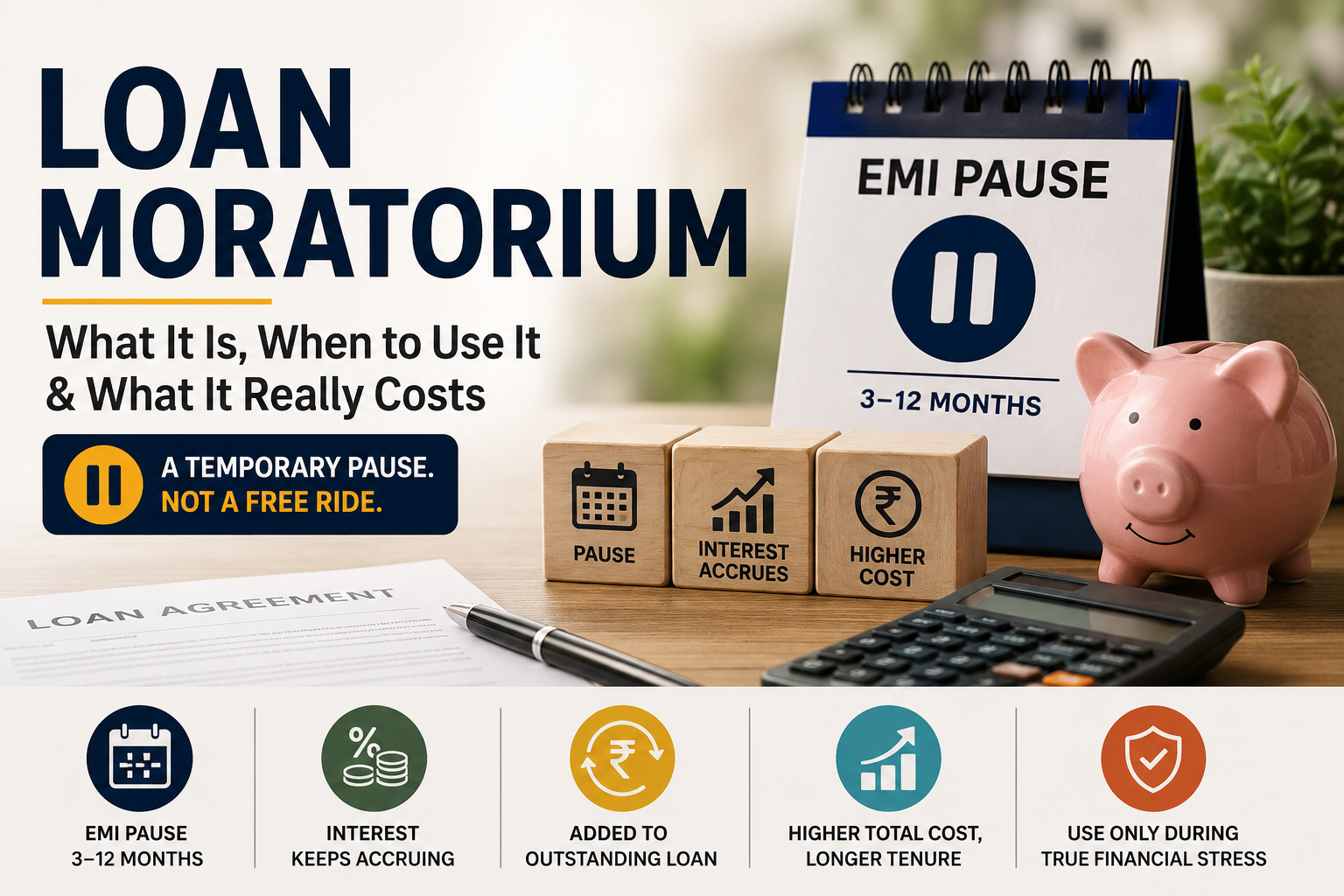
A loan moratorium is a temporary period during which a borrower is allowed to pause or defer EMI payments without being marked as a defaulter. In this guide, you’ll learn what a moratorium really means, how the deferred interest works, and when you should use it.
Quick Summary
- A moratorium is an EMI pause, typically granted for 3–12 months, allowed by lenders during financial hardship or under-construction periods.
- Interest continues to accrue during the moratorium and is added to the outstanding principal — it’s deferred, not waived.
- Common scenarios: under-construction property, RBI-mandated relief, education loan study period, job loss.
- Using a moratorium increases your total loan cost — sometimes by lakhs over the original tenure.
- It’s a short-term liquidity tool, not a way to reduce loan cost.
What Is Loan Moratorium?
What does it mean?
A loan moratorium is a lender-approved pause on your EMI payments for a defined period. The borrower is not classified as a defaulter, and there is no negative impact on the CIBIL score. However, interest continues to accrue and is added to the principal, increasing total dues.
How does it work?
When a moratorium is granted, the lender stops collecting EMIs. Interest still accrues every month and is capitalised — added to the principal. After the moratorium ends, the bank recalculates your loan by extending the tenure (most common), increasing the EMI, or asking for a lump-sum payment.
Types of Moratoriums
| Type | Who Grants It | Typical Duration |
|---|---|---|
| Construction moratorium | Lender (built into loan) | Until possession (1–3 years) |
| Hardship moratorium | Lender (case-by-case) | 3–6 months |
| Policy moratorium | RBI directive | 3–6 months (rare) |
| Education loan moratorium | Lender (built into loan) | Course duration + 6–12 months |
When to Use (and When Not to Use) a Moratorium
Opt for a moratorium only if: You face genuine short-term liquidity stress — job loss, major medical emergency — and have no other source to cover EMIs.
Avoid a moratorium if: You have alternative liquidity, or if your stress is short-term enough to manage by reducing other expenses.
If your main concern is that your monthly payments have become difficult to manage, explore our guide on How to Reduce Your Home Loan EMI Without Extending the Tenure to compare alternatives such as negotiating a lower interest rate or making a partial prepayment.
Practical Tips
- Calculate the additional interest cost before opting in.
- Use moratorium funds wisely — don’t spend the EMI savings on lifestyle.
- Resume EMIs as soon as possible.
- Consider partial EMIs (interest-only) instead of full pause if your lender allows it.
Common Mistakes to Avoid
- Treating a moratorium as a “free EMI holiday” — interest accrues every single month.
- Opting in just because it’s offered when you can comfortably continue paying.
- Not getting the revised loan schedule in writing.
FAQ
Does a loan moratorium hurt my CIBIL score?
A formally approved moratorium does not directly hurt your CIBIL score — missed EMIs during the moratorium are not reported as defaults.
A formally approved moratorium is different from an unauthorised missed payment, so read our guide on What Happens If You Miss a Home Loan EMI Payment? to understand the potential consequences of overdue EMIs and how to respond.
How is interest calculated during a moratorium?
Interest accrues on the outstanding principal at your existing loan rate every month and is capitalised at the end.
Can I take a partial moratorium?
Some lenders allow paying just the interest portion of the EMI during the pause, which reduces the compounding effect significantly.
Is a moratorium the same as loan deferment?
Loan deferment is a broader term. A moratorium specifically pauses EMI payments for a defined period.
What was the COVID-19 loan moratorium?
In March 2020, RBI permitted banks to offer a 6-month moratorium on EMI payments due to the pandemic’s economic impact.