Home Loan Interest Rate Comparison 2026: Public Banks vs Private Banks vs NBFCs
For a home loan interest rate comparison across banks and NBFCs in 2026, published starting rates from several major lenders are currently in the low-to-mid 7% range, but the rate you actually receive can be very different. Your credit profile, income, loan amount, tenure, employment, property and lender-specific pricing all influence the final offer.
If you are comparing lenders for a new loan or considering a balance transfer, the useful comparison is not simply “which lender has the lowest advertised rate?” It is which offer gives you the lowest overall borrowing cost for your profile.
What are home loan interest rates in 2026?
Home loan rates in 2026 vary by lender and borrower profile, with published rates from major lenders starting around the 7% range. For example, SBI currently displays home loan rates from 7.50% p.a. onwards, while Bajaj Housing Finance lists floating home loan rates from 7.25% p.a. for eligible salaried borrowers. ICICI Bank’s published standard rates currently start at 8.50%, while its page also displays customised and pre-approved pricing for eligible borrowers.
These numbers are published rates, not guaranteed offers. A practical comparison looks like this:
| Lender category | Examples of published rates in 2026 | Important point |
|---|---|---|
| Public sector banks | SBI from 7.50% p.a. | Pricing can vary by borrower profile |
| Private banks | ICICI standard rates from 8.50% p.a.; customised rates may differ | Credit score and other parameters matter |
| NBFC/HFC | Bajaj Housing Finance from 7.25% p.a. for eligible salaried borrowers | Pricing varies by borrower and loan type |
Rates can change, so verify the lender’s latest rate before applying.
Public banks vs private banks vs NBFCs: what is the difference?
Public banks, private banks and NBFCs can all offer competitive home loans, but their pricing models, eligibility criteria and customer processes can differ.
Public sector banks
Public sector banks can offer competitive home loan pricing, particularly for borrowers with strong credit profiles.
SBI, for example, currently displays home loan rates starting at 7.50% p.a. and has pricing that can vary according to applicable borrower and loan parameters.
When comparing public banks, look at:
- Interest rate and benchmark
- Credit-score requirements
- Processing charges
- Reset terms
- Prepayment conditions
- Documentation requirements
- Expected turnaround time
A lower published starting rate does not necessarily mean you will receive that exact rate.
Private banks
Private banks can offer competitive rates along with digital application and servicing options, but their final pricing is also profile-dependent.
ICICI Bank, for example, states that home loan rates vary according to factors including bureau score, customer segment, customer profile, loan amount and tenure. Its currently published standard rates range from 8.50% upward, while separate offers may apply to eligible customers.
HDFC also states that its home loan pricing depends on factors such as income, credit profile, employment category, property type and loan value.
NBFCs and housing finance companies
NBFCs and housing finance companies can also offer competitive home loan rates, and their underwriting may differ from traditional banks.
Bajaj Housing Finance currently lists floating home loan rates from 7.25% to 10.25% for salaried borrowers and 7.70% to 10.65% for self-employed borrowers. It also states that pricing considers factors such as credit score, income, employment, indebtedness, repayment history, loan amount, tenure and property characteristics.
So, an NBFC or HFC should not automatically be assumed to be more expensive than a bank.
Which lender has the lowest home loan rate in 2026?
There is no single lender category that consistently offers the lowest rate to every borrower. Published starting rates differ across lenders, while personalised offers depend on the borrower’s profile.
For example:
- SBI: from 7.50% p.a.
- Bajaj Housing Finance: from 7.25% p.a. for eligible salaried borrowers
- ICICI Bank: standard home loan rates from 8.50% p.a., with separate customised/pre-approved offers for eligible borrowers
These figures should not be treated as an apples-to-apples ranking because the eligibility conditions, borrower segments and pricing structures are different.
The more useful question is: What rate will this lender actually offer me?
How much does a 0.5% rate difference change your EMI?
A 0.5 percentage-point difference can materially change your repayment cost when the outstanding balance and tenure are large.
Consider an illustrative ₹50 lakh loan for 20 years:
| Interest rate | Approx. monthly EMI |
|---|---|
| 7.50% | ₹40,280 |
| 8.00% | ₹41,822 |
| 8.50% | ₹43,391 |
| 9.00% | ₹44,986 |
A reduction from 8.50% to 8.00% would reduce the illustrative EMI by about ₹1,569 per month.
Over a long tenure, the total interest difference can be much larger than the monthly EMI difference suggests. However, actual savings depend on your outstanding principal and remaining tenure.
You can use our EMI Calculator to compare rates and repayment periods using your own loan amount.
What factors determine the home loan rate you receive?
Your final home loan rate depends on more than the lender’s advertised starting rate. Common factors include:
- Credit score and repayment history
- Monthly or annual income
- Employment or profession
- Existing EMIs and total indebtedness
- Loan amount
- Loan-to-value ratio
- Property type and location
- Loan tenure
- Relationship with the lender
- Applicable benchmark and lender spread
For example, ICICI Bank explicitly notes that bureau score, customer segment, customer profile, loan amount and tenure can affect its home loan pricing.
This is why two borrowers applying for the same ₹50 lakh loan can receive different interest rates from the same lender.
What should you compare besides the interest rate?
The lowest interest rate is only one part of a home loan comparison. You should compare the total cost and contractual terms.
Check:
- Interest rate
- Benchmark and spread
- Reset frequency
- Processing fee
- Legal and technical charges
- Prepayment terms
- Conversion or switching charges
- Maximum tenure
- EMI
- Total interest payable
For example, a lender offering 7.50% may not necessarily be cheaper overall if another lender offers a slightly higher rate with substantially lower applicable costs or more favourable terms.
For floating-rate loans, also understand how benchmark changes can affect your EMI or tenure. Our guide to fixed vs floating home loan rates explains the practical differences.
Which is better for a home loan: bank or NBFC?
Neither banks nor NBFCs are universally better for every borrower; the better comparison is between the specific offers you qualify for.
Evaluate each offer on:
| Factor | What to compare |
|---|---|
| Interest rate | Your personalised rate |
| EMI | Monthly repayment |
| Total interest | Cost over remaining tenure |
| Fees | Processing and other applicable charges |
| Benchmark | How the rate can change |
| Eligibility | Conditions attached to the offer |
| Service | Application and servicing experience |
| Flexibility | Prepayment, switching and repayment options |
Your decision should be based on the complete loan economics rather than the lender’s category.
When should you consider a balance transfer?
A balance transfer is worth evaluating when another lender can offer a sufficiently lower rate and the interest saving is greater than the cost of switching.
For an existing borrower, compare:
- Current outstanding principal
- Current interest rate
- New lender’s rate
- Remaining tenure
- Existing EMI
- Revised EMI
- Total remaining interest
- Transfer-related costs
- Break-even period
For example, if your current home loan is at 9% and another lender offers 8%, the difference could be meaningful. But if only a small balance remains or the transfer costs are high, the actual benefit may be limited.
Our Balance Transfer option can help you estimate the potential EMI and interest savings before you decide whether switching lenders is worth exploring.
How should you compare home loan offers in 2026?
The most reliable comparison is based on personalised offers for the same loan amount and tenure.
Follow these steps:
- Shortlist lenders across public banks, private banks and NBFCs/HFCs.
- Check the published rate and eligibility conditions.
- Ask for your personalised interest rate.
- Compare the same loan amount and tenure across offers.
- Calculate the EMI.
- Compare total interest.
- Add applicable fees and charges.
- Check the benchmark and reset mechanism.
- If you already have a loan, calculate the balance-transfer break-even period.
- Choose based on the complete cost and terms.
This approach prevents a low advertised rate from becoming the sole deciding factor.
Conclusion
A home loan interest rate comparison across banks and NBFCs in 2026 shows that competitive rates are available across different lender categories. Current published starting rates include SBI from 7.50% p.a. and Bajaj Housing Finance from 7.25% p.a. for eligible salaried borrowers, while private-bank pricing can vary significantly based on borrower profile and loan characteristics.
But there is no universally lowest-cost lender for every borrower. Your actual rate, outstanding balance, tenure, fees, benchmark and repayment terms determine the real cost.
If you already have a home loan, compare your current loan with personalised alternatives before deciding whether to switch. Use our Balance Transfer option to estimate potential savings, compare the repayment cost and understand whether a balance transfer could work for your loan.
FAQs
What are the lowest home loan interest rates in India in 2026?
Published starting rates from several major lenders are currently in the 7% range. SBI displays home loan rates from 7.50% p.a., while Bajaj Housing Finance lists rates from 7.25% p.a. for eligible salaried borrowers. Actual rates depend on borrower and loan-specific factors.
Are public banks cheaper than private banks for home loans?
Not necessarily. Both public and private banks offer different rates based on borrower profiles, loan characteristics and their pricing policies. Compare personalised offers rather than lender categories.
Are NBFC home loans more expensive than bank home loans?
Not necessarily. NBFCs and housing finance companies can offer competitive rates. Bajaj Housing Finance, for example, currently lists salaried home loan rates starting at 7.25% p.a.
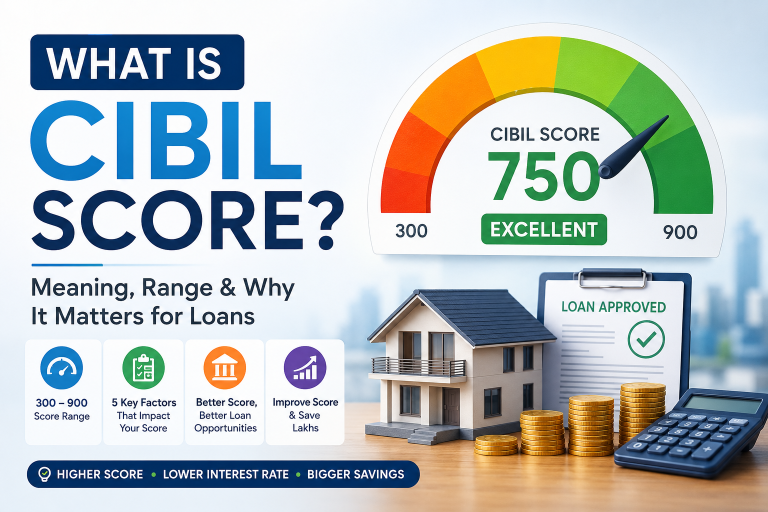
Does CIBIL score affect my home loan interest rate?
Yes. Credit score is one of the factors lenders can consider when pricing a home loan. ICICI Bank and Bajaj Housing Finance both state that credit or bureau score influences home loan pricing.
Is a 0.5% lower home loan rate worth a balance transfer?
It can be, particularly when the outstanding principal and remaining tenure are substantial. But compare the expected interest saving with processing and other applicable transfer costs before switching.
Should I compare home loan EMI or total interest?
Compare both, but total remaining interest is usually more informative about borrowing cost. A lower EMI can sometimes result from a longer tenure, which may increase the total interest paid.
Can my existing bank offer me a lower rate if another lender has a better offer?
You can ask your existing lender to review your pricing and compare its revised offer with the alternative. If the bank matches a competitive rate, staying may avoid the costs and paperwork of a balance transfer.