6 Ways to Increase Your Home Loan Eligibility Quickly
If you want to increase your home loan eligibility quickly, the most practical steps are to reduce existing EMIs, add an eligible co-applicant, improve your credit profile, document all eligible income, choose a longer tenure carefully, and compare lenders with different eligibility policies. There is no guaranteed shortcut, but these changes can improve your borrowing capacity when they strengthen your repayment profile.
Nestara’s New Home Loan journey can help you check your eligibility and compare lender options based on your profile, property and requirements rather than relying on a generic estimate. Check your home loan eligibility with Nestara.
What Determines Your Home Loan Eligibility?
Your home loan eligibility is primarily determined by your repayment capacity, which depends on income, existing liabilities, expenses, credit profile, age, tenure and other lender-specific factors. RBI’s consumer guidance says banks assess factors such as monthly disposable or surplus income, expenses, spouse’s income, assets, liabilities and income stability when deciding housing-loan eligibility.
For example, two people earning ₹1 lakh per month may qualify for different loan amounts:
| Borrower | Monthly Income | Existing EMI | Potential Impact |
|---|---|---|---|
| A | ₹1,00,000 | ₹0 | Higher eligibility |
| B | ₹1,00,000 | ₹15,000 | Lower eligibility |
| C | ₹1,00,000 | ₹25,000 | Significantly lower eligibility |
This is why increasing your salary is not the only way to increase home loan eligibility.
1. Reduce Your Existing EMIs
Reducing existing loan obligations is one of the quickest ways to improve home loan eligibility. When fewer of your monthly earnings are committed to existing loans, more repayment capacity can be available for the proposed home loan.
Suppose your monthly income is ₹1 lakh and you already pay ₹20,000 towards a personal loan and car loan. If you close one of those loans and reduce your monthly obligations by ₹10,000, the lender may have more room to consider a higher home-loan EMI.
Before applying, review:
- Personal loan EMIs
- Car or vehicle loan EMIs
- Education loan EMIs
- Credit card instalments
- Other outstanding loan obligations
Don’t take a new loan simply to improve one part of your financial profile. The goal is to reduce your overall monthly debt burden, not shift it elsewhere.
2. Add an Eligible Co-Applicant
Adding a co-applicant with a stable eligible income can increase your combined borrowing capacity. A lender may consider both applicants’ incomes when assessing repayment capacity, subject to its policies.
For example:
- Applicant’s income: ₹70,000
- Co-applicant’s eligible income: ₹50,000
- Combined income considered: potentially ₹1.20 lakh
This can make a meaningful difference when one income is not enough for the desired loan amount.
A co-applicant can be particularly useful for married couples where both partners earn a regular income. However, the co-applicant’s existing liabilities, credit history, age and eligibility will also be assessed.
3. Improve Your Credit Profile
A stronger credit profile can improve your chances of qualifying and may help you access better loan terms. It does not guarantee a higher loan amount, but it can strengthen your overall application.
Before applying:
- Pay all existing EMIs on time.
- Clear outstanding credit card dues.
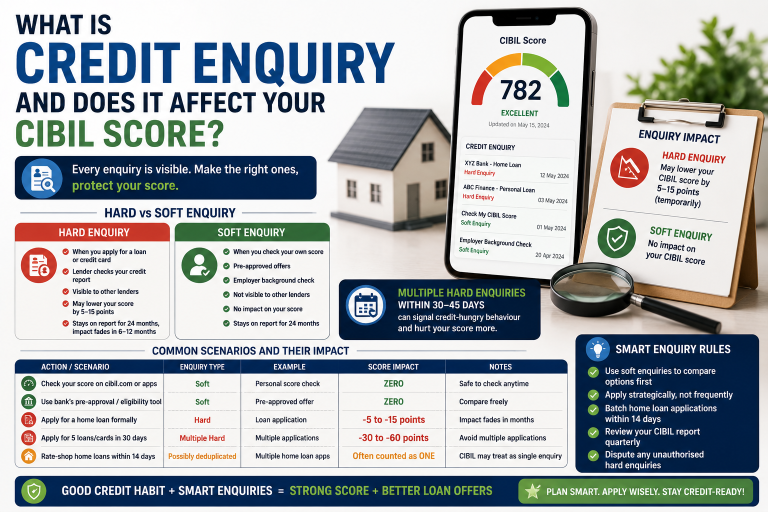
- Avoid unnecessary loan or credit-card applications.
- Check your credit report for errors.
- Keep credit utilisation under control.
If your credit report contains incorrect information, getting it corrected can be more useful than simply waiting for your score to change.
4. Include All Eligible and Documented Income
Including legitimate, documented income can improve your assessed repayment capacity when the lender accepts those income sources. Don’t assume that only your fixed monthly salary matters.
Depending on the lender and borrower profile, potentially relevant income can include:
- Regular bonuses
- Performance incentives
- Rental income
- Professional or business income
- Other documented recurring income
The important word is documented. A calculator may allow you to enter an additional income amount, but a lender will generally verify income through appropriate documents.
For salaried applicants, this can include salary slips, bank statements, Form 16 and other documents requested by the lender. Self-employed applicants may need business and income-tax records.
5. Choose a Longer Tenure Carefully
Choosing a longer repayment tenure can increase your calculated loan eligibility because it lowers the EMI for a given loan amount. However, it does not make the loan cheaper.
For example, consider a ₹50 lakh home loan at an illustrative 8.5% interest rate:
| Tenure | Approx. EMI |
|---|---|
| 15 years | ₹49,237 |
| 20 years | ₹43,391 |
| 25 years | ₹40,261 |
| 30 years | ₹38,446 |
A borrower who cannot comfortably support a ₹49,000 EMI may qualify for a larger loan with a 30-year tenure because the monthly repayment is lower.
But there is a trade-off: the longer the tenure, the more interest you generally pay over the life of the loan.
So don’t choose 30 years automatically just to maximise eligibility. Use the tenure that balances affordability with total borrowing cost.
6. Compare Lenders Instead of Applying to Just One
Comparing lenders can increase your chances of finding a higher eligible loan amount because lenders can have different interest rates, income-assessment methods and credit policies.
For the same borrower, one lender may offer a lower loan amount while another may be more comfortable with the profile.
Compare:
- Eligible loan amount
- Interest rate
- Maximum tenure
- Existing EMI treatment
- Income criteria
- Processing and other applicable charges
- Property eligibility
- Prepayment terms
This is especially important if your profile doesn’t fit neatly into a standard salaried-borrower category.
Nestara says its platform compares options across 60+ lenders and matches loan options to the borrower’s profile, property and requirements.
What Does Not Increase Home Loan Eligibility Quickly?
Some commonly suggested strategies do not actually increase your eligibility by themselves.
Making a larger down payment
A larger down payment does not directly increase your income-based eligibility. It reduces the amount you need to borrow, which can make the desired property more affordable.
Applying to many lenders at once
Multiple formal credit applications in a short period are not a strategy for increasing eligibility. Compare lenders first and apply selectively.
Choosing the maximum possible tenure
A longer tenure can improve calculated eligibility, but it also increases the total interest cost. It should be used as a repayment-planning tool, not simply to maximise borrowing.
Taking another loan to improve your credit profile
Taking on new debt purely to manipulate your eligibility is counterproductive. Existing obligations can actually reduce your repayment capacity.
How Quickly Can You Increase Your Home Loan Eligibility?
The timeline depends on what is limiting your current eligibility. Some improvements can happen immediately, while others take months.
| Action | Potential Speed |
|---|---|
| Compare lenders | Immediate |
| Choose a suitable longer tenure | Immediate |
| Add eligible co-applicant | Potentially immediate, subject to documentation |
| Close/reduce an existing EMI | Depends on loan and lender |
| Correct credit-report errors | Depends on the correction process |
| Improve repayment history | Takes time |
| Increase salary/income | Usually takes longer |
If you’re planning to apply soon, focus first on factors you can realistically change before submitting the application.
Should You Increase Eligibility Just to Borrow More?
No. You should increase eligibility only if the additional loan remains affordable. A higher eligible amount does not automatically mean a higher loan is the right decision.
Before increasing your borrowing, check:
- Your comfortable monthly EMI
- Existing debt
- Emergency savings
- Down payment available
- Registration and stamp-duty costs
- Insurance and household expenses
- Future financial commitments
- Total interest over the loan tenure
RBI’s guidance emphasises repayment capacity rather than simply maximising the loan amount.
A useful next step is to calculate the EMI for the loan amount you want and compare it with your actual monthly cash flow.
How Can Nestara Help You Check Your Improved Eligibility?
Nestara can help you move from a generic eligibility estimate to lender options matched to your actual profile. Its platform says it considers credit, income, property and lender-policy information when showing relevant options, and allows borrowers to compare multiple lenders before applying.
You can first check your current eligibility, identify what may be limiting your borrowing capacity, make practical changes where possible, and then compare your options again.
Conclusion
The fastest practical ways to increase your home loan eligibility are to reduce existing EMIs, add an eligible co-applicant, strengthen your credit profile, document all eligible income, choose your tenure carefully and compare multiple lenders.
However, don’t increase your eligibility simply to take a bigger loan. The right loan is one where the EMI fits comfortably within your monthly budget while leaving enough room for savings and unexpected expenses.
Check your home loan eligibility with Nestara to understand your borrowing capacity and compare lender options based on your actual profile before you apply.
FAQs
How can I increase my home loan eligibility quickly?
The quickest practical options are to reduce existing EMIs, add an eligible co-applicant, include all documented income, choose a suitable longer tenure and compare lenders with different eligibility criteria. Improving your credit history is also important, although it usually takes longer.
Does paying off an existing loan increase home loan eligibility?
Yes, paying off or reducing an existing loan can increase your repayment capacity because less of your monthly income is committed to existing EMIs. The actual impact depends on the lender’s eligibility calculation.
Can a co-applicant increase my home loan eligibility?
Yes. An eligible co-applicant with stable income can potentially increase the combined income considered by the lender. The co-applicant’s own age, credit profile, liabilities and documentation will also be assessed.
Does a higher credit score increase home loan eligibility?
A stronger credit profile can improve your chances of approval and may help you access better loan terms. However, credit score is only one part of the lender’s assessment and does not guarantee a higher loan amount.
Does increasing the loan tenure increase eligibility?
Generally, yes. A longer tenure lowers the EMI for a given loan amount, which can increase the amount you may qualify for under an EMI-based assessment. However, the total interest paid is generally higher.
Can increasing my down payment increase home loan eligibility?
A larger down payment does not directly increase your income-based loan eligibility. Instead, it reduces the amount you need to borrow and can make a property more affordable or help you meet the lender’s loan-to-value requirements.
Does applying to multiple banks increase my chances of getting a higher loan?
Not necessarily. Applying everywhere is not the same as comparing lenders. It is better to compare eligibility, rates and terms first and then apply selectively to lenders that fit your profile.
How can I check my home loan eligibility before applying?
You can use Nestara’s New Home Loan journey to check your eligibility and compare relevant lender options based on your profile, property and requirements.