What Documents Do You Need for a Home Loan Balance Transfer?
The documents required for a home loan balance transfer usually include your identity and income proofs, existing loan statements, repayment history, property documents and paperwork from your current lender. Since a balance transfer involves both your existing and new lender, additional documents may be requested depending on the lender, property and borrower profile.
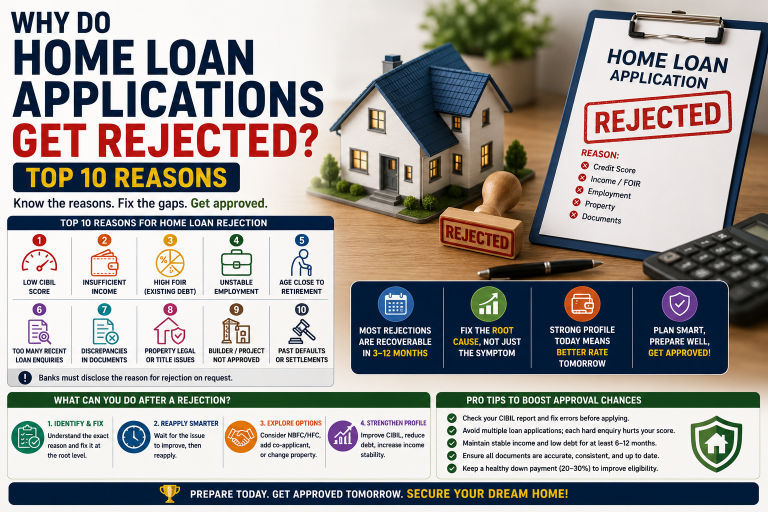
Having these documents ready before applying can make the process considerably smoother. Nestara can help you check suitable balance-transfer options and compare lenders before you start submitting paperwork.
Why are documents important for a home loan balance transfer?
Documents are important because a balance transfer requires the new lender to assess your repayment history, financial profile, existing loan and property before taking over the outstanding loan.
Unlike a fresh home loan, a balance transfer involves an existing lender as well as a new lender. The new lender needs enough information to understand the loan being transferred and verify that the property and borrower meet its requirements.
Incomplete paperwork can result in:
- Delayed credit or income verification
- Additional document requests
- Delays in property verification
- Delays in sanction or disbursement
- Delays in closing the existing loan
That is why it is better to prepare the documents before you formally apply.
Documents required for a home loan balance transfer
The exact checklist varies by lender, but most borrowers should prepare documents from five main categories.
1. Identity and address proof
You will generally need documents to establish your identity and current address.
Common examples include:
- PAN card
- Aadhaar card
- Passport
- Voter ID
- Driving licence
- Address proof, where required
The lender may specify which documents it accepts and whether additional verification is required.
2. Income and employment documents
Income documents help the new lender assess whether you can comfortably service the transferred loan.
For salaried borrowers, commonly requested documents may include:
- Latest salary slips
- Bank statements showing salary credits
- Form 16 or income-tax documents
- Employment or income-related documents, where applicable
For self-employed borrowers, the lender may request:
- Income-tax returns
- Profit and loss statements
- Balance sheets
- Business or financial statements
- Bank statements
- GST-related documents, where applicable
The exact requirements depend on how your income is assessed and the lender’s credit policy.
3. Existing home loan documents
Your current lender’s documents are particularly important because the new lender needs to establish the outstanding loan amount and repayment status.
Keep ready:
- Latest home loan statement
- Loan account number
- Outstanding principal details
- Repayment history
- Existing loan sanction letter or agreement, if available
- Current interest-rate details
- Foreclosure or closure statement, when requested
- No-dues/NOC or equivalent closure documentation at the appropriate stage
The exact documents exchanged during the transfer can differ between lenders.
4. Property documents
The new lender may need to conduct legal and technical checks on the property before approving the transfer.
Depending on the property and lender, documents can include:
- Sale deed or title deed
- Previous title documents
- Agreement for sale
- Approved building or layout plan
- Possession certificate
- Occupancy certificate, where applicable
- Property tax receipts
- Society or association documents, where applicable
- Existing lender’s property-document list
Not every borrower will need to provide every document on this list. The requirement depends on the property type, location, ownership structure and lender’s verification process.
5. Documents from the existing lender
The existing lender may need to provide information or documents that allow the new lender to complete the transfer.
These may include:
- Outstanding loan statement
- Repayment track record
- Foreclosure or outstanding-demand statement
- List of original property documents held by the lender
- Loan account details
- Closure-related documents
- NOC or equivalent documentation, depending on the lender’s process
RBI guidelines require regulated lenders to follow transparent processes for loan transfers and release of property documents after repayment or settlement, subject to applicable requirements.
Documents required based on your borrower profile
The basic checklist changes depending on whether you are salaried or self-employed.
| Document category | Salaried borrower | Self-employed borrower |
|---|---|---|
| PAN/identity proof | Usually required | Usually required |
| Address proof | Usually required | Usually required |
| Salary slips | Usually required | Not applicable |
| Bank statements | Usually required | Usually required |
| Form 16/ITR | May be required | Usually required |
| Business financials | Not applicable | May be required |
| Existing loan statement | Required | Required |
| Repayment history | Required | Required |
| Property documents | As applicable | As applicable |
This is an indicative checklist. Your lender may request additional documents based on your circumstances.
What documents should you get from your current lender first?
Before applying for a transfer, prioritise your latest loan statement, outstanding balance details and repayment history.
These documents help you understand exactly what is being transferred and allow the new lender to assess the existing loan.
It is also useful to confirm:
- Current outstanding principal
- Current interest rate
- Remaining tenure
- EMI amount
- Loan account status
- Property documents held by the existing lender
- Any applicable closure or transfer-related charges
For floating-rate loans taken by individual borrowers for non-business purposes, applicable prepayment rules may limit foreclosure charges, but the exact position depends on the loan type, lender and applicable RBI rules. Always check your loan documents and the current lender’s applicable schedule.
Can you apply for a balance transfer without all the documents?
You may be able to start the eligibility or comparison process without having every final document ready, but the lender will generally need the required documents before completing its assessment and transfer process.
This distinction matters.
Nestara’s digital journey allows borrowers to check eligibility and find lenders quickly and submit documents digitally. With Nestara, eligibility and lender matching can happen in seconds, document submission in minutes and eligible loans can be sanctioned in 4 hours. However, sanction should not be confused with completion of the entire balance transfer, which can still depend on verification and the existing lender’s closure process.
How to prepare your documents before applying
The easiest way to avoid delays is to create a digital folder containing all your documents before you begin.
Use this checklist
- PAN and identity/address proof
- Latest salary slips or income documents
- Bank statements
- Form 16/ITRs, where applicable
- Latest home loan statement
- Repayment history
- Existing loan agreement/sanction letter
- Property documents available with you
- Property tax or society documents, if applicable
- Foreclosure/closure statement when requested
- Details of the original property documents held by your existing lender
Make sure names, addresses and other key details are consistent across your documents. If there is a mismatch, resolve it before it becomes a reason for additional verification.
Does having the documents ready guarantee a faster transfer?
No. Having complete documents can reduce avoidable delays, but it does not guarantee a fixed processing time.
The new lender may still need to complete:
- Credit assessment
- Income verification
- Property legal verification
- Technical valuation
- Internal approval
- Coordination with your existing lender
- Loan settlement and document-release formalities
So, documentation is one part of the process, not the only factor determining how quickly your balance transfer is completed.
Should you gather documents before comparing lenders?
Yes. But compare your options before making multiple formal applications.
A lower advertised rate does not automatically mean a balance transfer will save you money. You should compare your current outstanding balance, interest rate, remaining tenure, new rate, revised EMI and all applicable transfer costs.
Nestara’s Balance Transfer can help estimate the potential interest saving and break-even period before you commit to a transfer.
Conclusion
The documents required for a home loan balance transfer generally cover your identity, income, existing loan, repayment history and property. The exact checklist varies by lender and borrower profile, so you may be asked for additional documents during verification.
The smartest approach is to prepare your paperwork while comparing lenders—not after choosing one. That way, once you find a potentially better offer, you are in a position to move forward without unnecessary delays.
If you’re considering switching your home loan, explore Nestara’s Balance Transfer options and compare potential savings before submitting a formal application.
FAQs
What are the main documents required for a home loan balance transfer?
The main documents generally include identity and address proof, income documents, bank statements, existing home loan statements, repayment history and relevant property documents. Your lender may request additional documents based on your profile.
Do I need my existing home loan statement for a balance transfer?
Yes. The latest loan statement is important because it shows information such as your outstanding balance and loan-account details. The new lender uses this information while assessing the proposed transfer.
Do I need property documents for a home loan balance transfer?
Yes, the new lender may need property documents for legal and technical verification. The exact documents depend on the property and lender’s requirements.
Can a salaried person transfer a home loan without Form 16?
It depends on the lender and how your income is assessed. The lender may accept alternative income documentation or request additional proof. Check the specific lender’s requirements rather than assuming one document is mandatory for every application.
What documents are required from my existing lender?
You may need your latest loan statement, repayment history, outstanding balance or foreclosure statement and information about the original property documents held by the lender. The exact process varies between lenders.
Can I submit documents online for a home loan balance transfer?
Yes. Many lenders now support digital document submission. Nestara’s current process also allows borrowers to submit documents digitally as part of its home-loan journey.
Does a balance transfer require a new property valuation?
It may. The new lender can conduct legal and technical verification of the property as part of its approval process. Whether a fresh valuation is required depends on the lender and property.
Can I check balance-transfer eligibility before collecting all documents?
Yes. You can generally begin by checking your eligibility and comparing potential options, but the lender will require the relevant documentation before completing its assessment and transfer. Nestara allows borrowers to check eligibility and find lender options before proceeding with document submission.
Does a balance transfer affect my credit score?
A formal application can involve a credit enquiry, depending on the lender and process. It is therefore better to compare suitable options first rather than making unnecessary applications with multiple lenders.