60+ Lenders vs One Bank: Why Comparing Matters on a ₹50L+ Loan
Comparing multiple lenders for a home loan can help you find a better combination of interest rate, loan amount, tenure, fees and eligibility terms instead of accepting the first offer you receive. On a ₹50 lakh or larger loan, even a small difference in interest rate can translate into a meaningful difference in your EMI and total interest.
Nestara gives borrowers access to 60+ lenders and lets them compare options based on their profile, property and borrowing needs rather than relying on a single bank’s offer.
Why Comparing Multiple Lenders Matters for a ₹50L+ Home Loan
Comparing lenders matters more as the loan amount increases because the same interest-rate difference applies to a larger outstanding balance.
Consider a ₹50 lakh loan for 20 years:
| Interest rate | Approx. EMI | Approx. total interest |
|---|---|---|
| 8.00% | ₹41,822 | ₹50.37 lakh |
| 8.50% | ₹43,391 | ₹54.14 lakh |
| Difference | ₹1,569/month | ₹3.77 lakh |
Illustrative calculation assuming the rate remains unchanged for the full tenure.
A 0.50 percentage-point difference therefore looks small on paper but can amount to roughly ₹3.8 lakh in interest over 20 years.
The actual saving will depend on the rate offered, loan tenure, repayment pattern and future rate changes for floating-rate loans.
Why the First Bank’s Offer May Not Be Your Best Offer
The first bank you approach may not necessarily offer the lowest rate or the highest eligible loan amount for your profile.
Lenders assess borrowers differently. One lender may be comfortable with your income structure, employer, age or existing obligations, while another may offer a lower eligible amount.
For example, two lenders might evaluate a borrower earning ₹1.2 lakh per month differently:
- Lender A: Offers ₹55 lakh at 8.5%
- Lender B: Offers ₹60 lakh at 8.1%
- Lender C: Offers ₹52 lakh at 7.9%
The lowest advertised rate does not automatically make Lender C the best option. If the required loan is ₹55 lakh, Lender C may not meet the borrower’s funding requirement.
The right comparison is therefore rate + eligibility + total cost + loan terms, not rate alone.
What Should You Compare Between Home Loan Lenders?
You should compare the complete cost and terms of the loan rather than only the headline interest rate.
1. Interest Rate
The interest rate directly affects your EMI and total interest. For floating-rate loans, also check the applicable benchmark and spread because the rate can change over time.
For bank retail loans, RBI regulations require floating-rate lending to retail borrowers to be linked to external benchmarks.
2. Eligible Loan Amount
A lender offering a lower rate is not useful if it does not approve enough to fund your purchase.
Check how the lender evaluates:
- Monthly income
- Existing EMIs
- Credit profile
- Age
- Employment or business stability
- Property value
- Loan-to-value requirements
3. Processing and Other Charges
A lower interest rate can be offset by higher upfront costs.
Compare:
- Processing fee
- Legal and technical charges
- Administrative charges
- Documentation charges
- Conversion or switching fees, where applicable
The RBI’s Key Facts Statement framework is intended to help borrowers understand important loan costs before taking a loan, so review the KFS and sanction documents carefully.
4. Tenure and EMI
Compare the EMI at the same loan amount and tenure. Otherwise, you may mistakenly think one offer is cheaper simply because it has a longer repayment period.
A lower EMI does not necessarily mean a lower-cost loan.
5. Prepayment Flexibility
If you expect to make part-prepayments from bonuses, investments or other surplus funds, check the lender’s applicable prepayment terms.
This can materially affect the interest you eventually pay.
How Comparing Lenders Can Help With Eligibility
Comparing lenders can improve your chances of finding a suitable loan because eligibility criteria are not identical across lenders.
Suppose you need ₹60 lakh but your first bank approves only ₹48 lakh. That does not necessarily mean you cannot qualify for ₹60 lakh elsewhere.
Another lender may assess your:
- Income differently
- Existing obligations differently
- Co-applicant income differently
- Property profile differently
- Credit history differently
This is particularly relevant for borrowers with variable income, self-employment income, a recent job change, higher existing EMIs or a less straightforward financial profile.
However, comparing lenders does not guarantee approval. Every lender remains responsible for its own credit and property assessment.
Is Applying to 60+ Lenders a Good Idea?
Having access to 60+ lenders does not mean you should independently submit applications to 60 lenders.
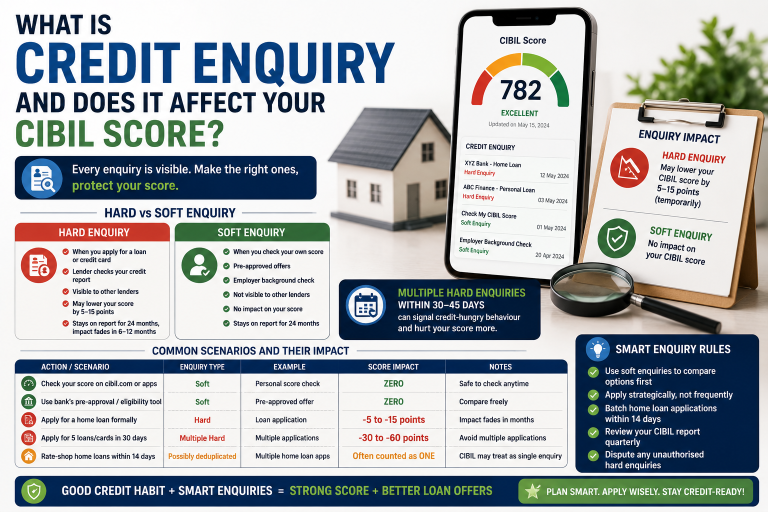
Multiple formal credit applications can create unnecessary enquiries on your credit profile, and applying indiscriminately also creates paperwork and confusion.
The better approach is to compare first and apply selectively.
A lender-comparison platform can be useful because it can narrow the options before you proceed with a formal application. Nestara says its model is designed to compare offers across multiple lenders without requiring borrowers to apply everywhere.
One Bank vs Multiple Lenders: What’s the Difference?
The key difference is the range of options available before you make a decision.
| Factor | One Bank | Multiple Lenders |
|---|---|---|
| Rate comparison | Limited | Wider |
| Eligibility comparison | One lender’s criteria | Multiple criteria |
| Loan amount | Based on one policy | More options to evaluate |
| Fee comparison | Limited | Easier |
| Negotiating position | Lower | Potentially stronger |
| Time required | Less initially | More if done manually |
| Chance of finding a better fit | Depends heavily on the bank | Potentially higher |
The important point is that more lenders do not automatically mean a better loan. The value comes from identifying the lenders that actually fit your financial and property profile.
When Should You Compare Lenders?
You should compare lenders before submitting a home loan application, ideally after you know your approximate property budget and required loan amount.
A practical process is:
- Calculate the loan amount you actually need.
- Check your credit profile and existing EMIs.
- Compare eligible lenders.
- Compare interest rates and total costs.
- Check the sanctioned amount you may qualify for.
- Review the KFS and final terms.
- Apply with the lender that offers the best overall fit.
This approach is particularly useful for a ₹50 lakh+ loan because even small differences in pricing can have a large rupee impact.
How Nestara Helps You Compare Home Loan Options
Nestara’s New Home Loan journey is designed to match borrowers with home loan options based on their profile, property and requirements. The platform says borrowers can compare multiple lender offers and receive expert guidance through the loan process.
Instead of asking only, “Which bank has the lowest rate?”, the more useful question is:
“Which lender is most likely to give me the loan amount I need at competitive overall cost and suitable terms?”
That shift can make lender comparison much more practical.
Conclusion
For a ₹50 lakh or larger home loan, choosing the first bank that approves you can leave significant money on the table. A difference of just 0.5% in interest can potentially mean several lakhs in additional interest over a long tenure.
That does not mean you should chase the lowest advertised rate. Compare eligibility, loan amount, interest rate, EMI, tenure, fees, prepayment flexibility and overall terms before deciding.
If you’re planning to buy a home, explore Nestara’s New Home Loan options to check your eligibility and compare suitable lenders before committing to one bank.
FAQs
Is it better to compare multiple banks for a home loan?
Yes. Comparing multiple lenders can help you identify differences in interest rates, eligibility, loan amounts, fees and repayment terms. The best lender is not necessarily the one advertising the lowest rate.
Can I get a ₹50 lakh home loan from a bank if another bank rejected me?
Yes, it is possible. Lenders have different eligibility and credit policies, so rejection by one lender does not automatically mean every lender will reject your application. However, approval depends on the second lender’s assessment.
Does comparing home loan rates affect my CIBIL score?
Simply comparing rates does not necessarily create a hard credit enquiry. However, formally applying for credit can result in a lender accessing your credit report. Avoid submitting applications indiscriminately to many lenders.
How much difference does 0.5% make on a ₹50 lakh home loan?
At a 20-year tenure, a 0.5 percentage-point difference can amount to roughly ₹1,500–₹1,600 in monthly EMI and around ₹3.8 lakh in total interest, assuming the rates remain unchanged. Actual savings will vary.
Should I choose the lender offering the lowest home loan interest rate?
Not necessarily. Compare the rate alongside the sanctioned amount, processing and other charges, benchmark and spread, tenure, prepayment terms and overall suitability.
How many lenders should I compare before taking a home loan?
There is no fixed ideal number. The objective is to compare enough suitable lenders to understand your options without making unnecessary formal applications. Access to a broader lender network can make this process easier.